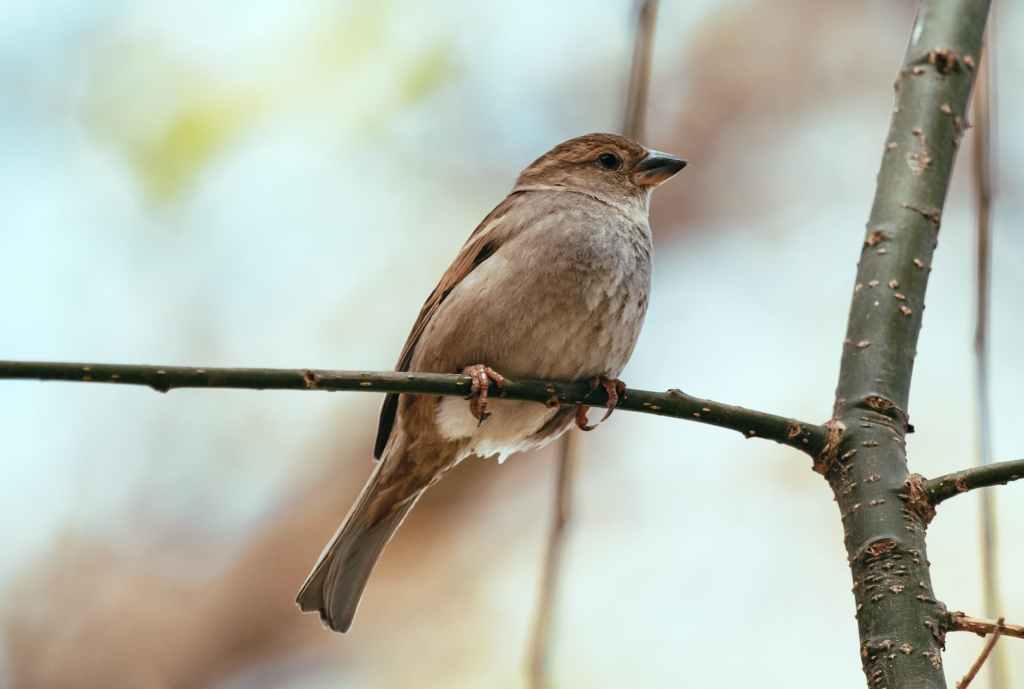
John Keats’ collection of odes can be read as the speaker’s development through using poetry to contemplate the outside world and his internal musings, with “Ode on Indolence” refusing to give in to the lure of love, ambition, and poetry, while “Ode on Melancholy” openly rejects lying in sadness and urges the audience to embrace beauty and joy. “Ode to a Nightingale” reflects a step in the speaker’s journey to take meaning from the world and objects and craft it into an art form, but he still struggles with an underlying wish to die that is heightened by the nightingale’s song. The speaker’s romanticization of death in “Nightingale” opens up his mind to the immortality of poetry, allowing him a medium to discuss his internal desires and providing a motivation to find eternal happiness like the bird. The nightingale becomes a lure for the speaker’s death, but also ignites his creative expression and desire to exist forever like the bird’s song.
“Nightingale” begins with the speaker’s admission that he feels a “drowsy numbness” (1) due to the bird’s song he is hearing. This isn’t because he is jealous of the bird’s happiness, he says, but because he finds he is happy that the bird is happy. “One minute past, and Lethe-wards had sunk:/Tis not through envy of thy happy lot,/But being too happy in thine happiness” (4-6). The joy that the bird creates with its song is both the reason for the speaker’s happiness and his depression. The following stanzas of the poem explain the speaker’s wish to be like the nightingale and his desperate urge to find a way to escape to the trees with it, such as alcohol, “O, for a draught of vintage!..” Keats writes, “…That I might drink, and leave the world unseen,/And with thee fade away into the forest dim” (11-20). Drinking would allow the speaker to become like the bird, forgetting his own body and place in the world and open up his imagination to have the same perspective as the nightingale. If he could be the nightingale, the speaker seems to think, he would embody the same happiness as the bird without the knowledge that it would all come to an end.
The speaker begins to long for death as he starts to see it as the only way to be like the nightingale. The nightingale doesn’t have an awareness of death the same way the speaker, and humanity in general, does. In fact, it seems as though the speaker wishes for death because he knows it is inevitable; only death will allow him to forget that death exists, in the same way the nightingale knows nothing about it. The speaker yearns to, “Fade far away, dissolve, and quite forget/What thou among the leaves hast never known,/The weariness, the fever, and the fret/…Where youth grows pale, and spectre-thin, and dies…” (21-26). The speaker wants to avoid the negative aspects of aging and doesn’t want to be constantly reminded that he is soon going to pass once he starts “graying” and “groaning,” and goes on to lament the loss of beauty that comes with dying and death. In “Nightingale,” the speaker cannot see the bird, only hear it, which is reminded to the audience with lines like, “of beechen green, and shadows numberless” (9) and “fade away into the forest dim” (20). It is the melody of the nightingale’s song that captures the speaker, and the song, not the bird itself, that is able to escape the inevitably of death and loss of beauty. While the bird, as an animal, cannot understand the concept of death in the same way the speaker, a human, can, it seems like the speaker has specifically picked the nightingale as his object of envy for a reason. It is the alluring song the nightingale chirps, one that announces the bird’s presence without it being seen and captures the joy of the bird’s existence, that captivates the speaker and makes him wish to become the nightingale. As the speaker soon realizes, poetry is to him as song is to the nightingale, and he is able to illustrate the beauty of death and the beauty of the song through verse.
The speaker, in the fourth stanza, gives up on his idea of drinking into the body of the nightingale. Instead, he “will fly to thee,/Not charioted by Bacchus and his pards,/But on the viewless wings of Poesy,” (31-33). The speaker has finally moved away from solely internal wishing and contemplation and now understands he can be with the nightingale through his poetry and imaginative mind. The “viewless wings” reflect how the speaker still cannot see the nightingale, only hear it, and poetry as well as the song allows him to make out the scene in the dark. “I cannot see what flowers are at my feet,” the speaker says, “Nor what soft incense hangs upon the boughs,/But in embalmed darkness, guess each sweet/Wherewith the seasonable month endows” (41-44). Now that the speaker has opened up his creative mind to poetry, the happiness and inspiration provided through the bird’s song allows him to sense the nature around him despite being blind in the dark. Much like his Romantic contemporaries, Keats brings in the beauty of nature to his Odes, and it is this beauty present in “Nightingale,” existing without sight, that reminds the speaker that the beauty can be ever-present as long as it is immortalized, as long as someone is able to sense, contemplate, and appreciate the nature around them.
The speaker even insists that the bird is immortal because of its song. “Thou wast not born for death, immortal Bird!/No hungry generations tread thee down;/The voice I hear this passing night was heard/In ancient days by emperor and clown” (61-64). The speaker appears to argue that while the single bird may be mortal, because its species and similar-sounding tune continue to exist that it is still immortal, that past generations and future generations will be able to hear the beauty of the song that the speaker is now witnessing. Similarly, poetry for the speaker, and like the Ode that Keats has created that depicts this song and the nature around the speaker, is a vessel to immortalize both the beauty the speaker sees in death and the beauty of the nightingale’s song. Poetry allows the speaker to imagine that he can fly into the trees like the bird, where he can express happiness through song and be ignorant to dying in the same capacity as the bird.
In Andrew Kappel’s article “The Immortality of the Natural: Keats’ ‘Ode to a Nightingale,’” he argues that it is not so simple to think of the bird as immortal because of its species or because of its song as a symbol for poetry; both would make man immortal, which the speaker makes it clear he is not. The difference, he says, is “the bird is oblivious to death, man painfully aware of it… What the poet seeks in the draught of vintage is ‘numbed sense to steel it,’ that is, an obliviousness to passed joy or ultimately death” (272-273). Alcohol would allow the speaker to forget about his mortality, in the same way the bird is unable to comprehend it. However, it seems like the bird is immortal both because it is unaware of death and because of its song; Kappel’s argument ignores that Keats includes the lines about the bird’s song being heard across generations right after expressing the bird’s immortality explicitly. Poetry, for the speaker, is able to have two effects that a mortal man can’t possess: the poetry is able to live forever, like the song, heard across generations, and the creative expression of poetry helps the speaker forget about death and become like the nightingale, much like how alcohol may have been able to deprive the speaker’s senses enough to forget about his mortality.
Because of the “viewless wings” of poetry, the hiding nightingale, and the darkness the speaker is surrounded by, tt seems, instead of warping senses like alcohol, poetry and creative expression takes away one sense—sight—in order to heighten the others and completely submerge oneself into contemplation and appreciation of the outside world. Kappel explains, “Sight aside, the imagination seeks through the sense of taste, hearing, and even touch to achieve the intense engagement that will afford to the consciousness now living predominantly through its physical senses the collapsed temporal focus that permits obliviousness to transience” (275). Without sight, the speaker is able to transport himself completely into an imaginative and creative state where he can place himself as the nightingale. The absence of sight is crucial to his poetic expression and subsequently the ability for him to be oblivious to death. The speaker’s willingness to alter his senses and reach into his full imaginative expression allow him to reach his desire of forgetting death, the feature of the nightingale he most envies.
While the speaker truly wishes for death at the beginning of the poem, his musings and contemplation of the bird force him to realize that death can be nothing but a fantasy for him. In the sixth stanza, he expresses that “Now more than ever it seems rich to die” (55) but “Still wouldst thou sing, and I have ears in vain—/To thy high requiem become a sod” (59-60). Dying would offer the speaker relief from the song, not because he doesn’t wish to hear it, but because it would help him forget that the joy heard in the bird’s song is because the bird is unaware of death, unlike the speaker; at the same time, the speaker would no longer be able to immerse himself in the bird’s lovely song if he were to die. The beauty of it, while existing forever in the natural world, would stop existing for the speaker. Poetry, then, becomes the way for the speaker to envision death and express his desire for it. The speaker goes on to claim the bird was not made for death, and if the speaker as well genuinely wishes to be like the bird, he has to create an art with the same captivating beauty and immortality as the bird has, while opening his imaginative mind and expression enough to forget about the inevitability of death.
By the eight stanza, the speaker is knocked out of his trance and can no longer hear the nightingale’s song. “Adieu! adieu! thy plaintive anthem fades/…Was it a vision, or a waking dream?/Fled is that music:—Do I wake or sleep?” (75-80). The speaker’s immersion has escaped, the lull of the nightingale gone with no evidence if it was real or all in the speaker’s head. With the nightingale’s song passing, so does the speaker’s wish for death as well as his creativity. As part of the Odes, “Nightingale” exists to open up the creative mind in response to a physical sensation; it can be seen as the development of the poet’s expression. In other Odes, like “To Autumn” or “Ode on Melancholy,” the speaker can create with or without the physical sensation and fully let himself over to imagination without interruption. In “Nightingale,” however, the bird’s song is vital for his inspiration and romanticization of death. In her article “Death in John Keats’ ‘Ode to a Nightingale’ and ‘The Eve of St. Agnes,’” Anne Hill explains how death portrayed in “Nightingale” is a unifying feature for the speaker and the bird. “The death expressed in stanza three and the end of the poem is directly opposed to the death-like slipping towards unity that the speaker desires: unifying death reduces the self in order to bring humans into fellowship with their surroundings, while destructive death kills through isolation” (Hill). When the speaker’s imagination is killed at the end of the poem, he is brought back to true mortality where neither his creativity nor the nightingale’s song is present, and so even the speaker’s wish for death through unity with the bird seems to disappear. It is the speaker’s longing for death, brought on by the nightingale’s song, that ignites his creative expression, and all of those things are snuffed out suddenly by the end of the poem, pulling the speaker back to his mortal self.
“Ode to a Nightingale” can provide a middle-ground step in a speaker’s progression to a full creative mind out of the complete set of John Keats’ Odes. The speaker is inspired by the song of the nightingale, but, twistedly, the song reminds the speaker of his true desire for death. It is the speaker’s wish for death that gives him the ability to try and place himself as the nightingale through poetry, and it is the sudden end of the speaker’s trance that ends the verse and the song. Poetry allows the speaker to forget about the inevitability of death, much like the bird’s song can exist in the same fashion because it is also unaware of death. As the speaker can find his most powerful inspiration for poetry through his internal wish for death, Keats’ audience can see throughout the rest of the Odes that the speaker has the potential to reach a creative peak without a physical trigger, so long as he absorbs himself in his contemplations and surroundings, the mark of a Romantic poet.
Works Cited
Hill, Anne R. “Death in John Keats’ ‘Ode to a Nightingale’ and ‘The Eve of St. Agnes’.” Inquiries Journal, vol. 13, no. 2, 2021, http://www.inquiriesjournal.com/a?id=1881.
Kappel, Andrew J. “The Immortality of the Natural: Keats’ ‘Ode to a Nightingale.’” ELH, vol. 45, no. 2, Johns Hopkins University Press, 1978, pp. 270–84, https://doi.org/10.2307/2872516.
 cliché musings
Leave a comment